

The classic memory match game has been played for generations, and today there are many variations. In this article we explain what memory games for kids and concentration games ask for, what to expect from them and how to play together.
What kind of «memory»?
- Visual memoryKeeping in mind where a picture was.
- Sequential memoryRemembering an order: first, next, last.
- Sustained attentionStaying focused while things change.
- Impulse controlNot tapping the first thing that appears.
Does a memory game improve memory?
Getting better at the game is very likely: the child learns strategies and gains practice. But research is cautious about transfer: being better at a memory game does not, on its own, mean a better memory at school or in daily life. What is practised tends to stay close to the task.
The value of these games lies in the challenge, the joy of succeeding and practising strategies, such as searching methodically or saying «the duck was in the corner», not in a promise to «boost» the brain.
How to play together
We recommend that children play these games with an available adult — a family member, educator, therapist or another trusted person. The adult can take turns, talk about strategies and adjust the difficulty; they should give time and respect it if the child wants to stop. Supporting is not correcting every mistake or testing memory.
- Take turns at the memory game. Waiting for your turn is learning too.
- Say the names aloud as you turn the cards: «cat… and here’s another cat!»
- Talk about strategy: «How did you remember?» Explaining helps thinking.
- Use sequence words: first, then, before, next, last.
- Adjust the difficulty: start with a few cards and add more gradually.
Frequently asked questions about memory games
From what age can children play the memory match game?
Versions with a few pairs can be played from an early age, with help. What matters is adjusting the number of cards so the child can succeed.
What are good concentration games for kids?
Games where the child has to look, follow or repeat, such as finding pairs, following the order of lights or spotting what is missing. Start easy, play for short spells and increase the difficulty gradually.
Do memory games help children with attention difficulties?
They can be an enjoyable and challenging activity, but they are not a treatment. If you are worried about attention, talk to a professional.
Memory game with cards or on a tablet?
Both have advantages. Cards make it easy to play together; the digital version adjusts the difficulty and says the names of the pictures.
A game score is not an assessment of a child’s memory or attention. If you have concerns, talk to their doctor or paediatrician.
Sources
- Lillard, A. S. et al. (2013). The impact of pretend play on children’s development: A review of the evidence. Psychological Bulletin, 139(1). doi:10.1037/a0029321
- Skene, K. et al. (2022). Can guidance during play enhance children’s learning and development in educational contexts? Child Development, 93(4). doi:10.1111/cdev.13730
Keep reading
Logic games for kids
Tower of Hanoi, Tangram and puzzles: plan and solve.
Read the article GuideBenefits of educational games
What children practise when they play, and what no game can promise.
Read the article GuideVocabulary games for kids
What a word game practises and how to turn it into conversation.
Read the articleSee the games in action
Explore how Talk+ games work. Choose around the child’s interests; these demonstrations are not treatment recommendations.
See all games →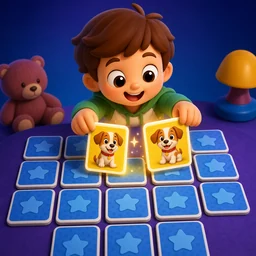 Memory Match
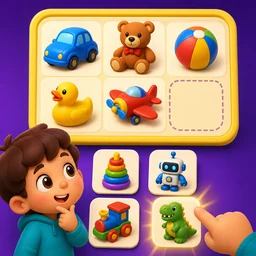 What's Missing?
 Follow the Lights
Published 14 October 2026 · Last reviewed: 14 October 2026
