

What is important to understand?
Between 4 and 5, many children enjoy simple rules, stories, patterns, sorting, construction, rhymes and cooperative games. Profiles still vary widely and rules can be simplified.
What cautions are needed?
Do not use winning, speed or scores to measure intelligence or school readiness. Reading games may exclude non-readers; competitive games may need emotional support.
What can you do next?
Mix tabletop, movement, creative and screen games, respecting breaks and interests. Ask open questions, accept varied responses and carry ideas into real-world play when enjoyable.
Conclusion
Mix tabletop, movement, creative and screen games, respecting breaks and interests. Ask open questions, accept varied responses and carry ideas into real-world play when enjoyable. This article is for information and does not replace assessment, diagnosis or individual guidance from qualified professionals.
Frequently asked questions
What is important to understand?
Between 4 and 5, many children enjoy simple rules, stories, patterns, sorting, construction, rhymes and cooperative games. Profiles still vary widely and rules can be simplified.
What cautions are needed?
Do not use winning, speed or scores to measure intelligence or school readiness. Reading games may exclude non-readers; competitive games may need emotional support.
What can you do next?
Mix tabletop, movement, creative and screen games, respecting breaks and interests. Ask open questions, accept varied responses and carry ideas into real-world play when enjoyable.
Can this article diagnose a child?
This article is for information and does not replace assessment, diagnosis or individual guidance from qualified professionals.
This article is for information only and does not replace an assessment by a health professional. If you are worried about a child’s development, talk to their doctor or paediatrician.
Sources
Keep reading
Word searches for children: do they help reading?
What the game practises, how to adapt it and why it does not replace reading instruction.
Read the article GuideBenefits of educational games
What children practise when they play, and what no game can promise.
Read the article GuideMemory games for kids
Attention, sequences and patterns, and how to play together.
Read the articleSee the games in action
Explore how Talk+ games work. Choose around the child’s interests; these demonstrations are not treatment recommendations.
See all games →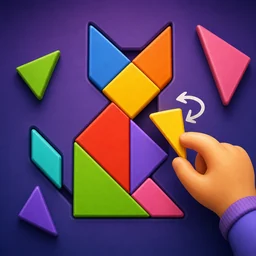 Tangram
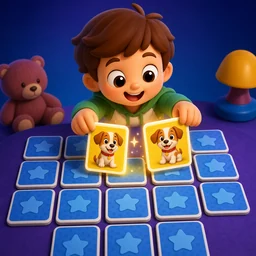 Memory Match
 Choose the Picture
Published 30 October 2026 · Last reviewed: 30 October 2026
