

What is important to understand?
At age 3, games can explore short turns, naming, imitation, picture matching, fitting, music, movement and pretend play. The age on the box is only a guide.
What cautions are needed?
An “educational” game does not guarantee learning and should not demand skills the child cannot yet show. Small parts, adverts, purchases and overstimulation also matter.
What can you do next?
Look at interest, accessibility, safety and whether rules can be adapted. An adult may join, name actions and wait for speech, gesture, gaze or AAC without correcting every turn.
Conclusion
Look at interest, accessibility, safety and whether rules can be adapted. An adult may join, name actions and wait for speech, gesture, gaze or AAC without correcting every turn. This article is for information and does not replace assessment, diagnosis or individual guidance from qualified professionals.
Frequently asked questions
What is important to understand?
At age 3, games can explore short turns, naming, imitation, picture matching, fitting, music, movement and pretend play. The age on the box is only a guide.
What cautions are needed?
An “educational” game does not guarantee learning and should not demand skills the child cannot yet show. Small parts, adverts, purchases and overstimulation also matter.
What can you do next?
Look at interest, accessibility, safety and whether rules can be adapted. An adult may join, name actions and wait for speech, gesture, gaze or AAC without correcting every turn.
Can this article diagnose a child?
This article is for information and does not replace assessment, diagnosis or individual guidance from qualified professionals.
This article is for information only and does not replace an assessment by a health professional. If you are worried about a child’s development, talk to their doctor or paediatrician.
Sources
Keep reading
Games for 4- and 5-year-olds
Memory, language, logic, movement and cooperation with adjustable challenge.
Read the article GuideBenefits of educational games
What children practise when they play, and what no game can promise.
Read the article GuideMemory games for kids
Attention, sequences and patterns, and how to play together.
Read the articleSee the games in action
Explore how Talk+ games work. Choose around the child’s interests; these demonstrations are not treatment recommendations.
See all games →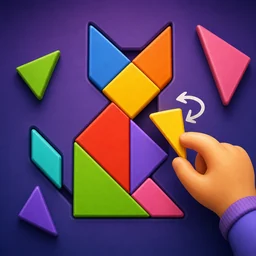 Tangram
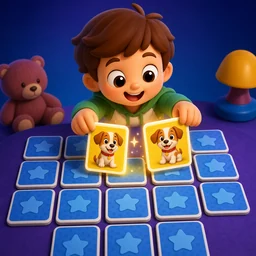 Memory Match
 Choose the Picture
Published 30 October 2026 · Last reviewed: 30 October 2026
