

Reading games for kids play with syllables, letters, sentences and stories. In this article we explain why spoken language is the foundation of reading, what each type of game practises and how to support children who are just starting.
Spoken language prepares children for reading
Before reading, a child needs a solid base of spoken language: vocabulary, sentences and the ability to tell what happened. It also helps to notice that words split into parts, such as syllables. Talking, reading stories aloud and playing with rhymes are still the best preparation.
Research shows that language difficulties in the early years are associated with reading difficulties later on: a 2026 Cochrane review found this association over time. It is a reason to pay attention to spoken language early, without waiting for school. See Language development in children.
Types of reading games and what they practise
- SyllablesPutting parts of words together shows that «di-no-saur» has three parts.
- LettersFinding and recognising letters practises visual attention and how words look.
- Word and pictureMatching a picture to the written word links what is seen to the word’s form.
- SentencesPutting words in order practises word order and sentence structure.
- StoriesOrdering pages practises the sequence of events: first, next, last.
These games practise
- Recognising syllables, letters and written words.
- The order of words in a sentence.
- The order of events in a story.
These games do not measure
- Whether the child produces the sentence on their own.
- Whether they can retell the story in their own words.
- Whether they understand what they read in other texts.
How to support early readers
- Read together every day, even if only for a short time.
- Point to the words as you read.
- Clap out the syllables of family names: «Ol-i-ver».
- Play with rhymes: «cat, hat, mat».
- Ask the child to retell a story, with words, gestures or pictures.
- Celebrate attempts, not just correct answers. Reading needs no rush.
We recommend that children use these games with an available adult, to talk about sounds, words and stories. Let the child take part by pointing, gesturing or using pictures, without rushing reading or demanding answers.
Frequently asked questions about learning to read
At what age should a child start reading?
Formal reading instruction usually begins in the first years of primary school, but interest in letters and books appears much earlier. What matters is enjoyment, without rushing.
Does word search help with reading?
It practises letter recognition and visual attention. Reading also requires linking letters to sounds and understanding what is read.
The child is finding it hard to learn to read. What should I do?
Talk to the teacher and, if needed, ask for an assessment. Reading difficulties can be linked to spoken language and deserve attention.
A game score is not an assessment of reading. If you have concerns, talk to the teacher, the child’s doctor or paediatrician.
Sources
- Hagen et al. (2026). Long-term prognosis of low language proficiency in children. Cochrane Database of Systematic Reviews. doi:10.1002/14651858.CD015268.pub2
- ASHA. Spoken Language Disorders — Practice Portal.
- Ansari et al. (2025). Vocabulary interventions for children with developmental language disorder: a systematic review. Frontiers in Psychology, 16. doi:10.3389/fpsyg.2025.1517311
Keep reading
Gamification and neuroplasticity: what structured video games can teach
The brain learns from experience, but playing does not guarantee generalization or replace intervention.
Read the article GuideVocabulary games for kids
What a word game practises and how to turn it into conversation.
Read the article GuideLanguage development in children
How children learn to communicate and what helps every day.
Read the articleSee the games in action
Explore how Talk+ games work. Choose around the child’s interests; these demonstrations are not treatment recommendations.
See all games →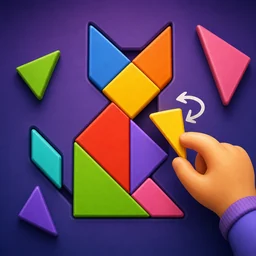 Tangram
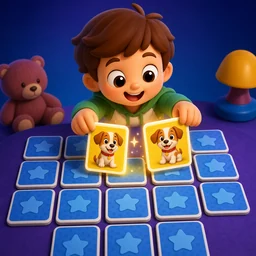 Memory Match
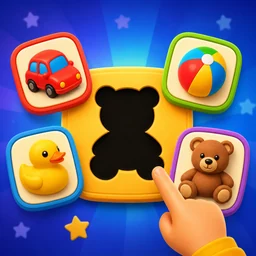 Choose the Picture
Published 14 October 2026 · Last reviewed: 14 October 2026
