

Neuroplasticity describes the ability of the nervous system to change with experience. Digital games can offer structured practice, feedback and repetition, but they are not automatic brain activation nor do they guarantee that a skill will carry over into daily life.
What a game can offer
A well-designed game can make practice motivating, adjust difficulty and give immediate feedback on a concrete task. Reviews of gamified interventions find promising results for specific goals, but studies vary and do not demonstrate that any video game changes the brain in any broad way. Preference for a game does not prove learning or clinical improvement.
How to assess whether it's worth it
Set an observable skill, track progress off-screen, and confirm your child remains interested and comfortable. Combine play with interaction, play and real activities. Take breaks and consider sensory and sleep needs. Games do not replace therapy, teaching or individual assessment.
In summary
Choose the tool based on the child's objective and experience, and evaluate what changes beyond the screen.
Informative content. It does not replace individual assessment or clinical or educational guidance.
Frequently asked questions
Does this theme apply the same to all children?
No. The decision must consider development, preferences, context and individual assessment.
When should I ask for help?
When the difficulty persists, affects communication, learning, safety or well-being, talk to qualified professionals and the school, depending on the context.
Does this information replace an individual assessment?
No. This article is general information. Decisions should be based on the child’s needs, context and assessment by qualified professionals.
Where can families find reliable guidance?
Start with the official sources linked in this article and discuss the child’s situation with the school and relevant qualified professionals.
This article is for information only and does not replace an assessment by a health professional. If you are worried about a child’s development, talk to their doctor or paediatrician.
Sources
- Systematic review and meta-analysis: Gamified digital interventions in autistic children and adolescents.
- PubMed: Systematic review on serious and entertainment games in autism.
Keep reading
Attention and concentration games for children
Short adaptable ideas, what they practise and why they are not an ADHD test.
Read the article Family questionsGames for 3-year-olds: how should you choose?
Simple language, movement, matching and pretend games for different profiles.
Read the article Family questionsGames for 4- and 5-year-olds
Memory, language, logic, movement and cooperation with adjustable challenge.
Read the articleSee the games in action
Explore how Talk+ games work. Choose around the child’s interests; these demonstrations are not treatment recommendations.
See all games →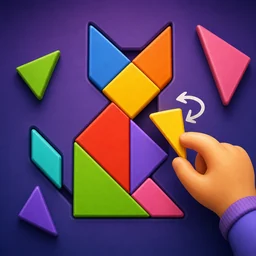 Tangram
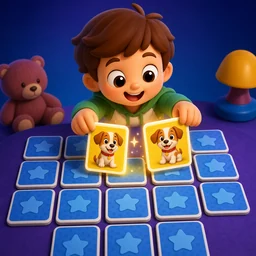 Memory Match
 Choose the Picture
Published 18 October 2026 · Last reviewed: 18 October 2026
