

The basis for these suggestions
Environment, understanding, interest and the child’s current state all affect attention. NHS children’s services advise reducing noise, gaining attention before instructions and choosing accessible activities. A confusing game places demands on more than concentration.
Staying involved and waiting for a signal are different demands. They can be combined, but change one feature at a time to understand where support helps. The examples below are play suggestions; they do not establish transfer to every school task or constitute ADHD treatment.
References for this background: Norfolk and Waveney Children’s Health Services — Attention & Listening · Children and Family Health Devon — Supporting listening skills: activities to try.
Three ideas to try
The activities below are educational examples created for this article, informed by the source principles. They are not a validated intervention programme. Choose one, demonstrate it and allow the child to try, ask for help, take a break or stop.
- A mission with an endingChoose three large objects to place in a scene. Demonstrate their destinations and complete one mission at a time. The ending is a finished scene, not enduring a timer.
- A search trailPlace familiar drawings along a short route and find them one by one. A child can move, use mobility support or point from a comfortable position.
- Ready, steady, goRoll a soft ball after an agreed signal. Demonstrate and keep the wait short. Let the child give the signal after several turns. Nobody is eliminated for moving early.
Making the activity accessible
Remove unnecessary distractions, explain one rule and agree a break. Reduce objects or steps if the child loses track. Movement and alternative responses can support participation. Do not withhold basic needs, demand eye contact or turn play into an obedience test.
Notice what made participation easier: fewer items, a demonstration or a gesture response. Return to that version before increasing difficulty. Compare with the child’s own previous experience rather than ranking children.
When to seek advice
Discuss persistent difficulties affecting several settings with school and health professionals. Share examples, supports tried and the effects of sleep, noise or task complexity. A short round or an off day cannot establish a diagnosis.
What we can conclude
What we can say
- A clear, accessible task can support involvement in that setting.
What we cannot say
- Playing longer does not prove a general attention improvement or rule out ADHD.
Information only. This does not replace individual assessment or advice from health and education professionals. Activities are adaptable suggestions; a game score is not a developmental assessment.
Frequently asked questions
How long should a child concentrate?
There is no simple minutes-per-age rule that assesses an individual child. Context, task and support matter.
Must the child sit still?
No. Movement and adapted access can be compatible with engagement.
Can games treat ADHD?
These suggestions do not replace assessment, school support or recommended care.
What if the child wants to stop?
Respect refusal, explore discomfort and adjust or end the activity.
This article is for information only and does not replace an assessment by a health professional. If you are worried about a child’s development, talk to their doctor or paediatrician.
Sources
Keep reading
Visual memory games for children: look and remember
Visual memory games for children: remember objects, positions and sequences, adapt access and understand the limits of game scores.
Read the article Family questionsAttention and concentration games for children
Short adaptable ideas, what they practise and why they are not an ADHD test.
Read the article Practical guideTeaching pupils with ADHD: attention, movement and learning
Teaching pupils with ADHD: attention, movement and learning requires attention to the specific barriers between the pupil, the task and the environment.
Read the articleSee the games in action
Explore how Talk+ games work. Choose around the child’s interests; these demonstrations are not treatment recommendations.
See all games →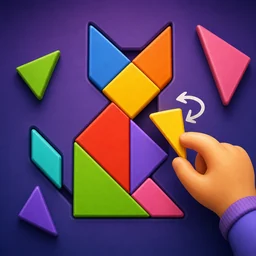 Tangram
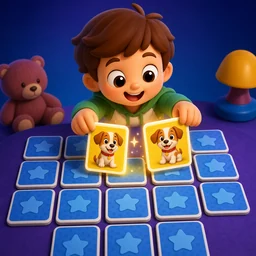 Memory Match
 Choose the Picture
Published 9 November 2026 · Last reviewed: 9 November 2026
