

The basis for these suggestions
Reading involves connecting print with speech sounds and understanding a message. The IES guide addresses sound awareness, links to letters, decoding and connected text. Memorising word shapes or guessing from pictures does not replace learning how print works.
Ask the teacher which letter–sound relationships have been taught. Choose words containing these and offer brief help. Reciting a familiar book from memory and reading an unfamiliar word are different tasks. Notice both without turning play into an examination. English spelling also requires explicit teaching of patterns and exceptions.
References for this background: IES / What Works Clearinghouse — Foundational Skills to Support Reading for Understanding · IES / REL Southeast — Supporting Your Child’s Reading at Home.
Three ideas to try
The activities below are educational examples created for this article, informed by the source principles. They are not a validated intervention programme. Choose one, demonstrate it and allow the child to try, ask for help, take a break or stop.
- Find the wordWrite three short words using taught correspondences. Read each by blending sounds, with help when needed. Then find its object or picture.
- A message for a toyUse a short sentence such as “The cat is on the mat”, if its patterns are familiar. Read it and act it out. Change one word and discuss what changes.
- A tiny adventure bookFold paper into two scenes. Help write short captions. The child reads an accessible part and listens to the rest, then talks about the beginning and ending.
Making the activity accessible
Use a few words, large print and no timer. A child using AAC can choose pictures or order elements to show understanding. Demonstrate unfamiliar steps first. An available adult can support digital play, but adult participation is a recommendation rather than a condition for playing.
Notice what made participation easier: fewer items, a demonstration or a gesture response. Return to that version before increasing difficulty. Compare with the child’s own previous experience rather than ranking children.
When to seek advice
Discuss persistent difficulty with the teacher, especially when suitable instruction and support have not helped or reading causes distress. Consider language, hearing and vision concerns. Judge progress in the context of learning opportunities rather than an age deadline.
What we can conclude
What we can say
- Games aligned with teaching can provide meaningful reading practice.
What we cannot say
- An app cannot guarantee literacy, and a game score cannot identify dyslexia.
Information only. This does not replace individual assessment or advice from health and education professionals. Activities are adaptable suggestions; a game score is not a developmental assessment.
Frequently asked questions
Must every six-year-old read independently?
No individual conclusion follows from age alone. School entry, instruction and support needs matter.
Should we start with letters or words?
Connect sounds and letters within accessible words, following school teaching and discussing meaning.
Can we use pictures?
Yes, for discussion and checking meaning. Avoid using them to guess instead of reading the print.
How long should we play?
Try a brief round and finish before fatigue. Helpful interaction matters more than accumulating minutes.
This article is for information only and does not replace an assessment by a health professional. If you are worried about a child’s development, talk to their doctor or paediatrician.
Sources
Keep reading
Syllable games: blending and breaking words apart
Syllable games for children: blend and segment spoken words, connect with taught spelling and adapt play without pressure.
Read the article GuideReading games for kids
Syllables, letters, sentences and stories, and how to support early readers.
Read the article Practical ideasPhonological awareness: rhymes, syllables and sounds before reading
What it is, how it develops from 3 to 6 and simple games to play at home.
Read the articleSee the games in action
Explore how Talk+ games work. Choose around the child’s interests; these demonstrations are not treatment recommendations.
See all games →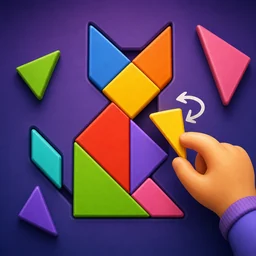 Tangram
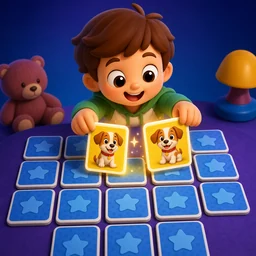 Memory Match
 Choose the Picture
Published 9 November 2026 · Last reviewed: 9 November 2026
